Building Curtain: searching 2.48 million movie frames
I wanted to build something which allowed people to match a screenshot they have with the specefic scenes from said movie.
for example, you would find a image on pinterest but you have no clue what movies its from. You open curtain paste and boom
That turned into Curtain. It now searches 2,481,255 frames from 150 movies. .
How it works
I sample each movie at two frames per second (probably overkill). I used 50,000 of those frames to train a ResNet-18 from scratch, then froze the model and ran all 2.48 million frames through it to build the actual search index.
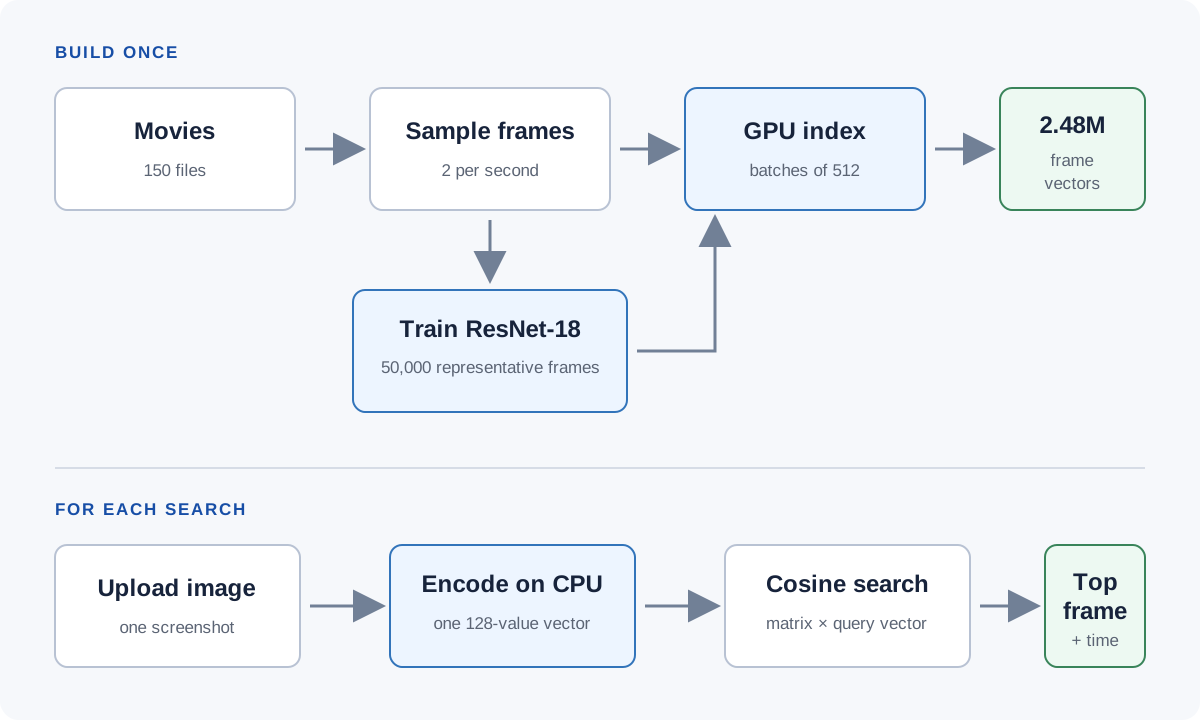
The model turns every image into 128 numbers. Since those vectors are normalized, searching is basically one large dot product. I didn't need a vector database or anything especially clever.
Teaching it what “the same frame” means
I wasn't trying to find images with the same general subject. Two completely different movies can both have a close-up of a face or a car at night. I needed the model to recognize two altered versions of the exact same shot.
During training, I make two copies of a frame and mess with them independently—lighting, blur, resolution, JPEG quality, and sometimes a crop. The model learns to pull those two embeddings together and push unrelated frames away.
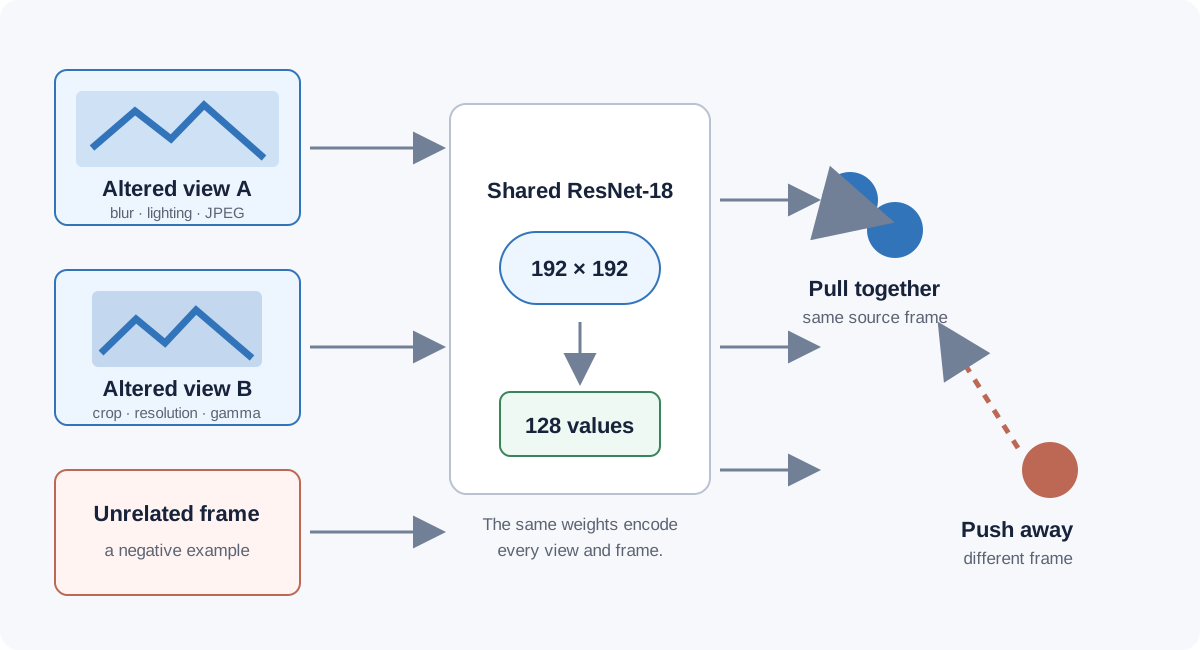
I also split training and validation by whole movies. Otherwise, nearly identical neighboring frames could leak into both sets and make the model look much better than it really was.
Getting through a few million images
I ran training and indexing on L4 GPUs through Modal. The indexer decodes JPEGs on the GPU, processes batches of 512, and stores compact float16 embeddings. It also records hashes and shapes so the site can't accidentally load an index made by the wrong model.
The live search runs on my own server,It embeds the uploaded image on the CPU, scans the saved matrix in chunks, and streams the progress to the browser.
One problem I actually understand
I'm calling Curtain somewhat finished, but it definitely isn't perfect. These three uploads are from the same shot. The first two miss; the third one works.
What disappears when the frame is cropped
Wide crop
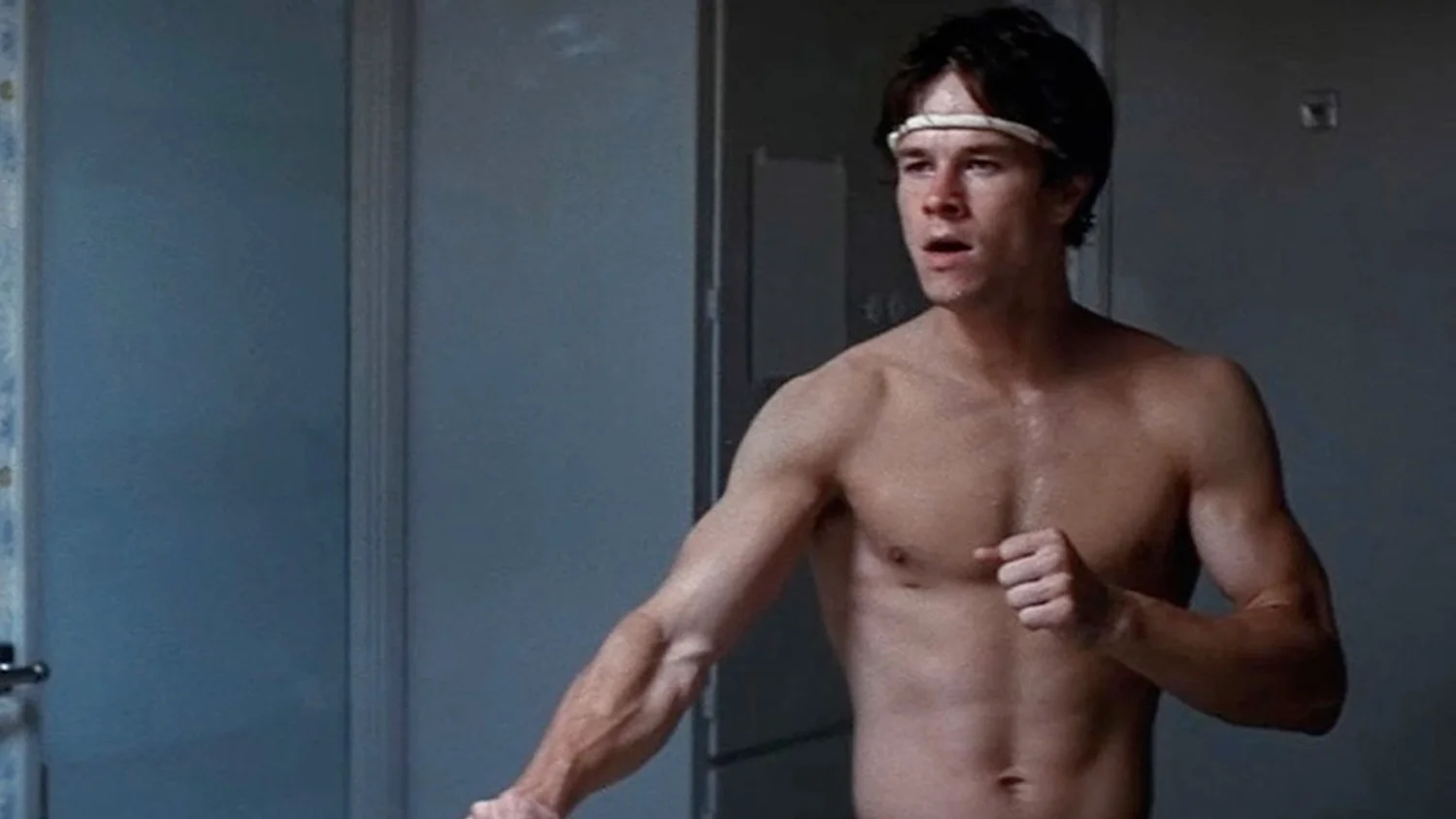
MISS
The wallpaper, mirror, and lower frame are gone.
Portrait crop
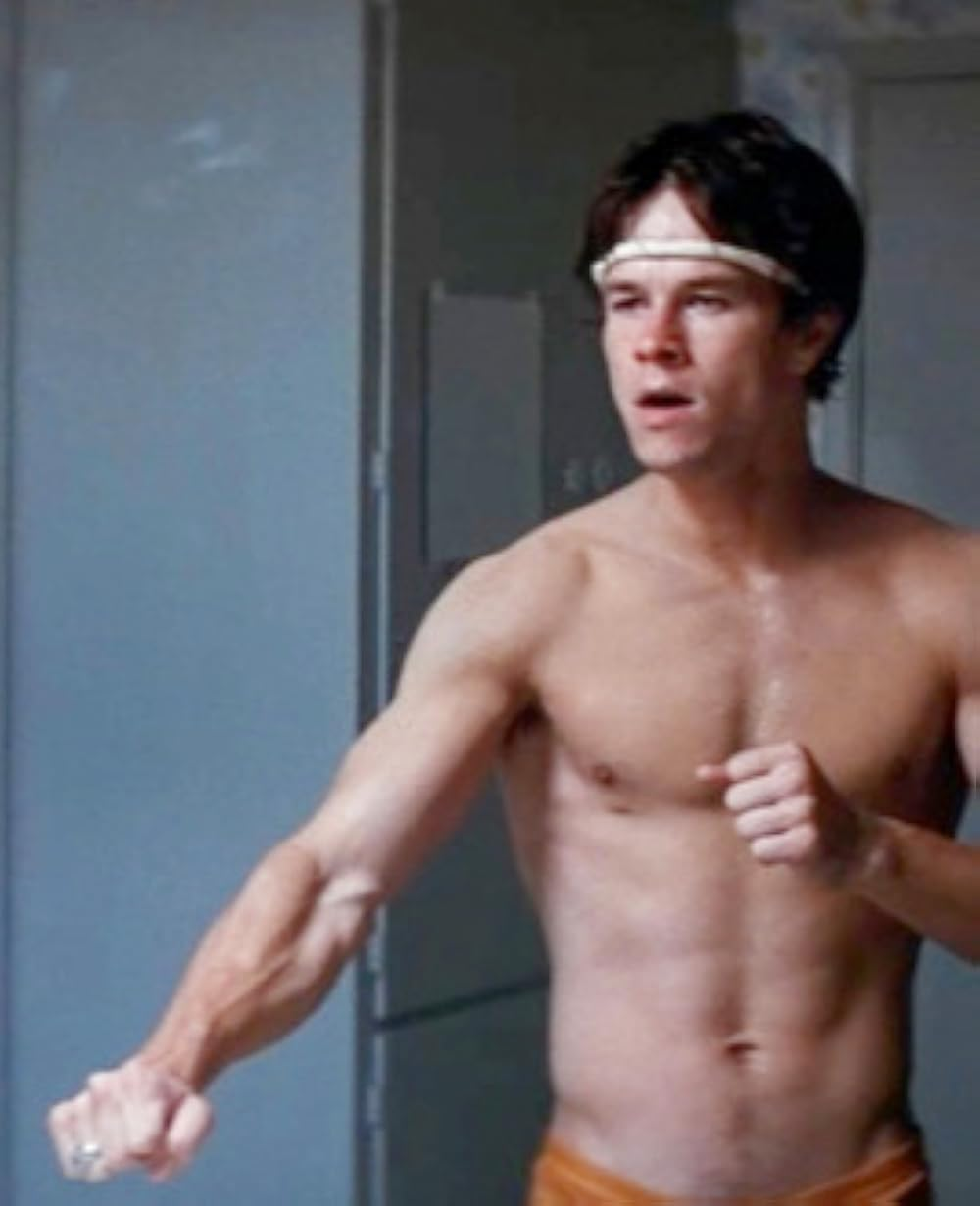
MISS
Most of the background is gone, and the aspect ratio changed.
Full frame
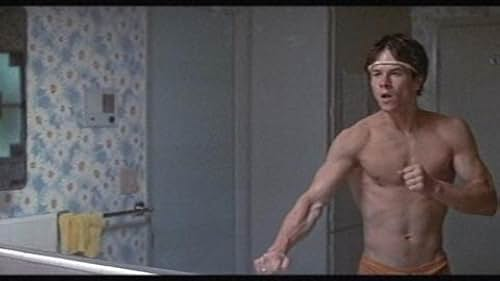 MATCH · full context stays
This makes sense once I look at how the model was trained. My crop augmentation always keeps at least 75 percent of the original width and height. These first two images go well beyond that, especially the portrait crop.
I see the same person and immediately know it's the same shot. The model also cares about the framing and the room around him. Once enough of that disappears, another frame can end up closer in embedding space.
I could train with more extreme crops or search several crops for every upload, but that would bring more compute and probably more false matches. I don't really feel like chasing that right now. The search works, the failure makes sense, and that's good enough for me to call the project done.
The diagrams were generated by GPT-5.6 Sol.